
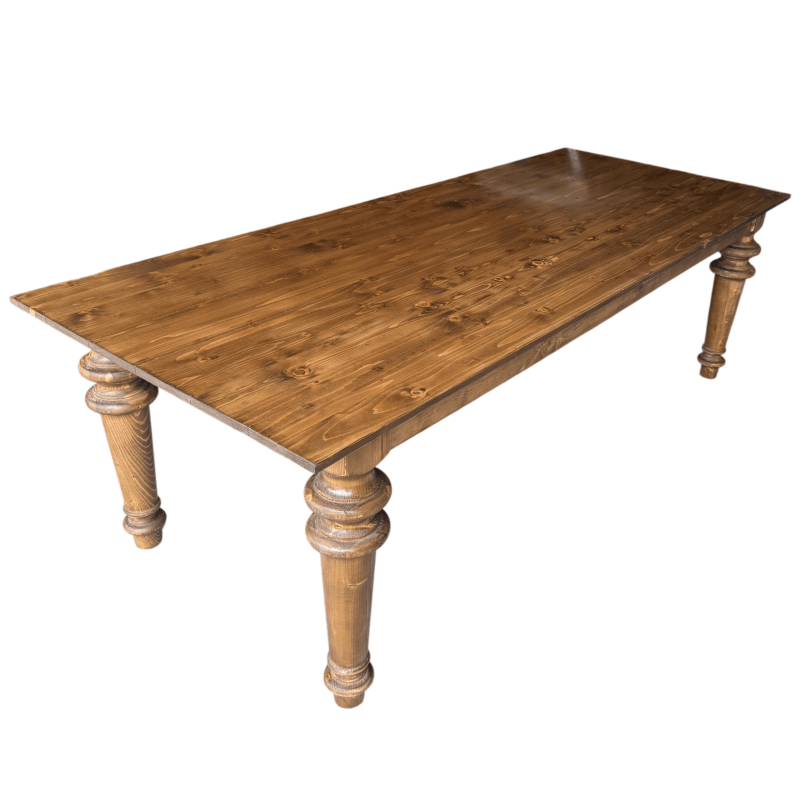
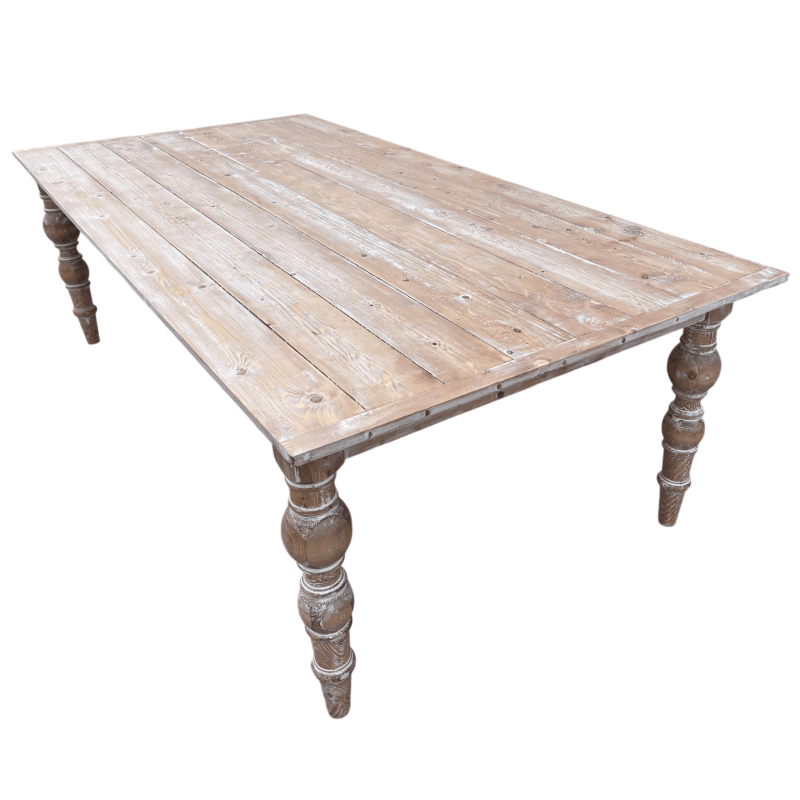
Turned Leg Dining Table
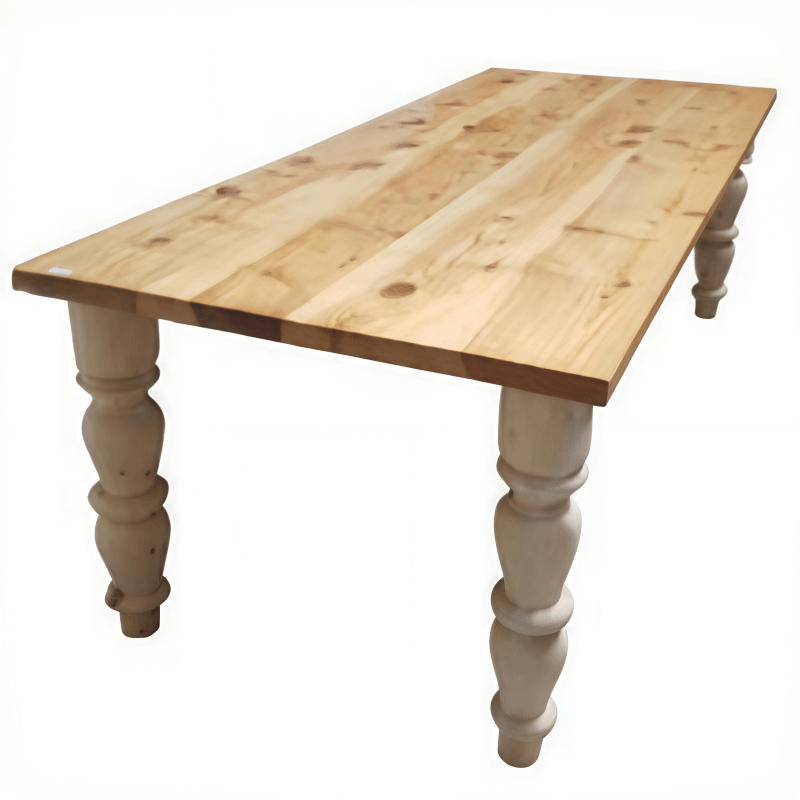
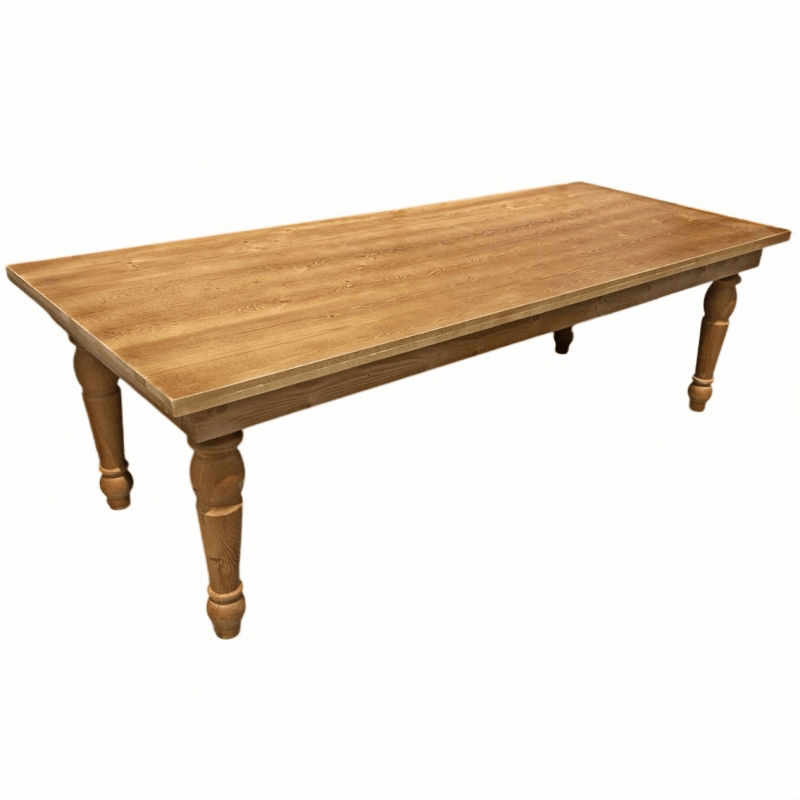
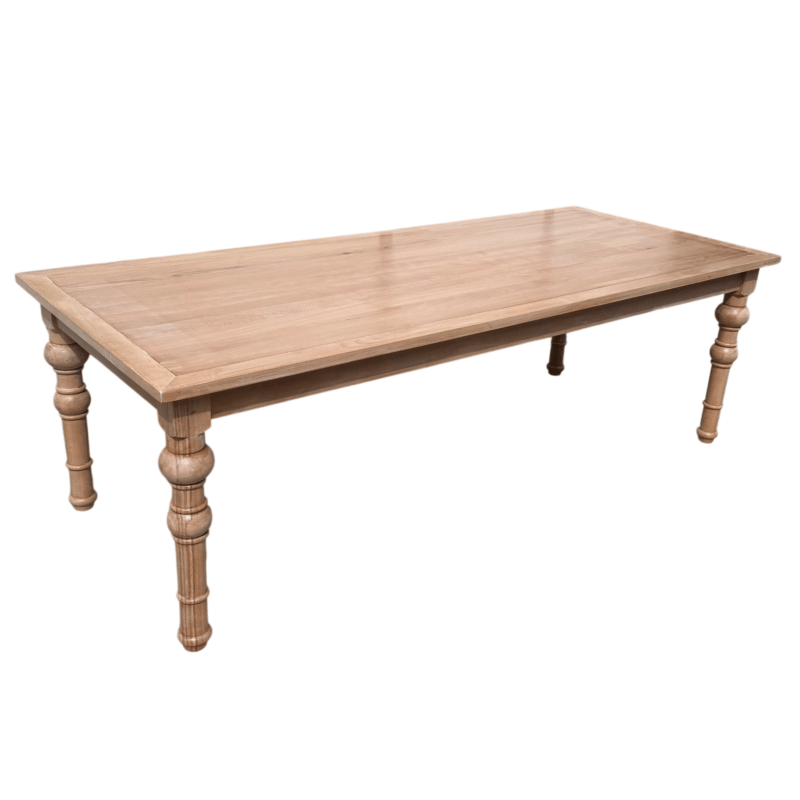
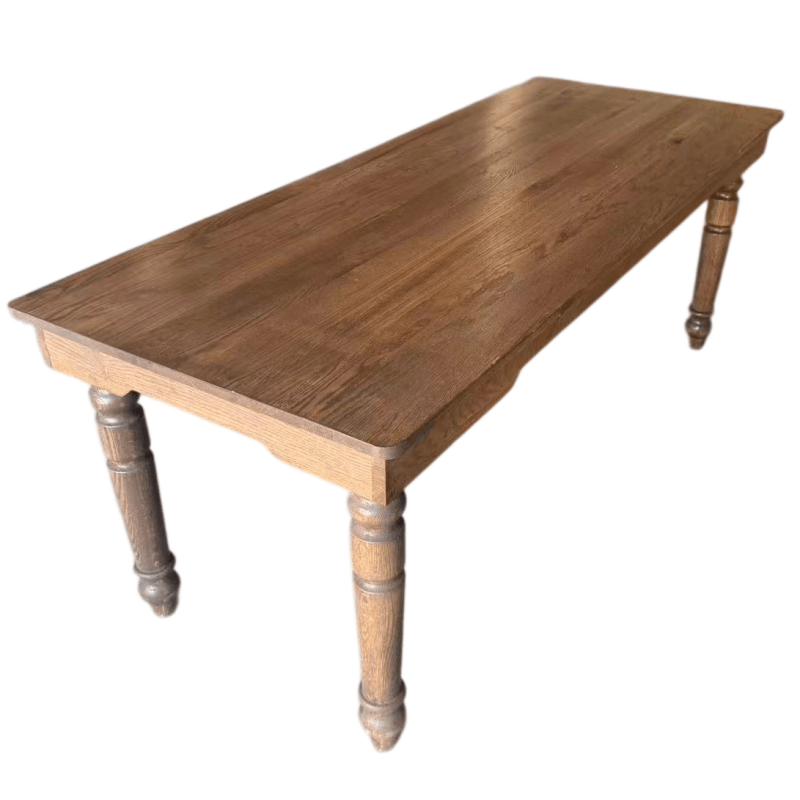
This dining table featuring turned legs perfectly blends classic farmhouse style with distinctive decorative details. It boasts a spacious rectangular tabletop and elegantly shaped turned legs that add a playful, modern touch to its classic silhouette. It is an ideal choice for everything from everyday meals and holiday gatherings to family celebrations, as well as for use in restaurants and hotel banquet halls. Its versatile design harmonizes beautifully with vintage wooden chairs or casual linen seating and complements modern furniture, making it a perfect fit for a wide range of interior styles—including farmhouse, European country, and modern eclectic.
Turned Leg Dining Table Feature
- Decorative turned table legs: distinctive rounded details create a classic look.
- Custom Finish Options :Multiple colors to suit different projects.
- Smooth Sanded Finish : Carefully refined surfaces and edges.
- Versatile Applications :Ideal for restaurants, hotels, weddings, and events.
Description
Main Material: Solid Wood Selection
Depending on client requirements or product specifications, we select high-quality solid woods such as pine,
oak, or rubberwood. Each piece of timber undergoes a rigorous selection process by our staff to ensure a clear,
natural grain, while any wood showing signs of insect damage, significant decay, or major structural defects is
discarded. Once selected, the timber is processed by our team through machine-based cutting, shaping, and
assembly stages.
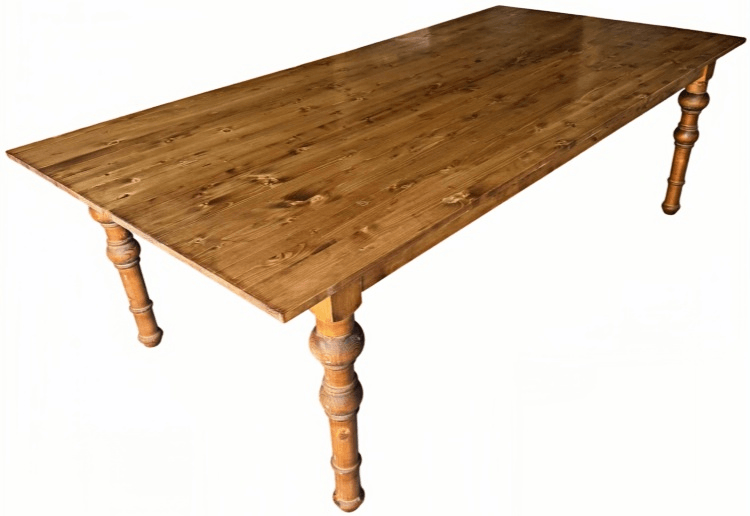
Wood Drying and Moisture Control
All selected solid wood materials undergo a secondary kiln-drying process, which further reduces and stabilizes
their moisture content—typically maintained between 8% and 12%. This controlled drying process helps the
wood adapt to varying environmental humidity levels, thereby minimizing the risk of warping, cracking,
or shrinkage during manufacturing, transportation, and long-term use.
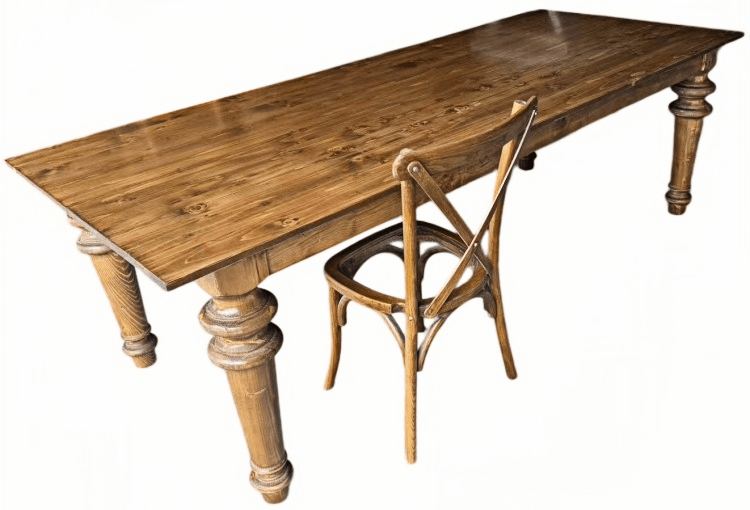
Wood Cutting
Once the timber boards have been dried, they are cut according to the specified dimensions for the tabletop.
Precision cutting equipment is used to ensure that the edges of the boards are straight and the dimensions
are uniform, thereby establishing a reliable foundation for tabletop assembly. Additionally, solid wood
components are cut for use in aprons, support frames, and the joints for the table legs.
Solid Wood Tabletop Panel Assembly
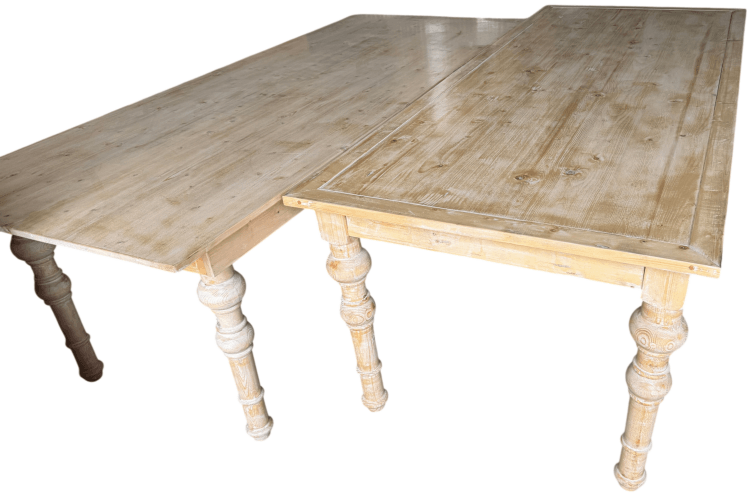
The turned leg dining table tabletop is constructed from several solid wood planks joined side by side.
Before assembly, the edges of the planks undergo precise processing; each side is planed and machined to
ensure that the joints fit together tightly and uniformly. The planks are carefully arranged to create a balanced
and natural grain pattern.
Apply high-quality wood glue to the mating surfaces and align the boards according to their natural grain
patterns. Clamp the boards together under controlled pressure to ensure tight joints, creating a single,
solid wood tabletop panel. Once the glue has fully cured, cut the panel to its final length and width. Finally,
level the surface to achieve a flat, uniform tabletop with clean, sharp edges.
Turning and Shaping the Decorative Wooden Legs
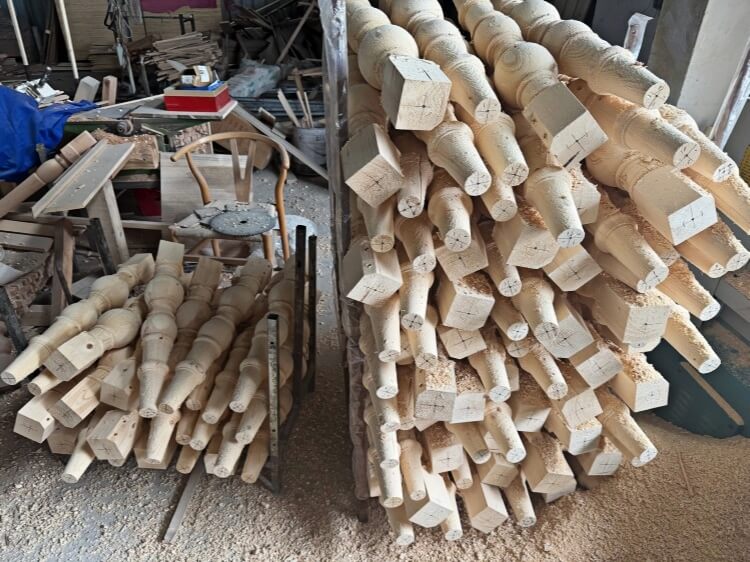
These uniquely shaped, turned table legs are a standout feature of the table’s traditional design. Once the
solid wood blanks have been cut to the required length, they are meticulously shaped using either a CNC
wood lathe or a traditional manual lathe. As the wood rotates, cutting tools gradually refine it into a form
characterized by rounded contours, tapered sections, decorative rings, and smooth, flowing curves.
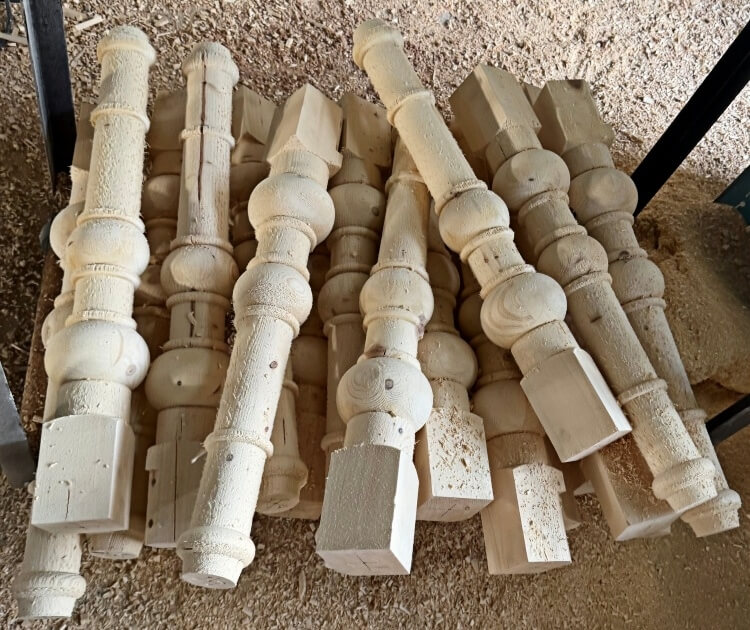
Once the turning process is complete, workers meticulously sand the surfaces to remove machining marks,
splinters, and burrs, ensuring a smooth, tactile finish on the curved surfaces. Finally, the finished table legs
undergo inspections for dimensional accuracy, consistency in shape, and surface quality, preparing them for
the subsequent stages of assembly and finishing (painting/coating).
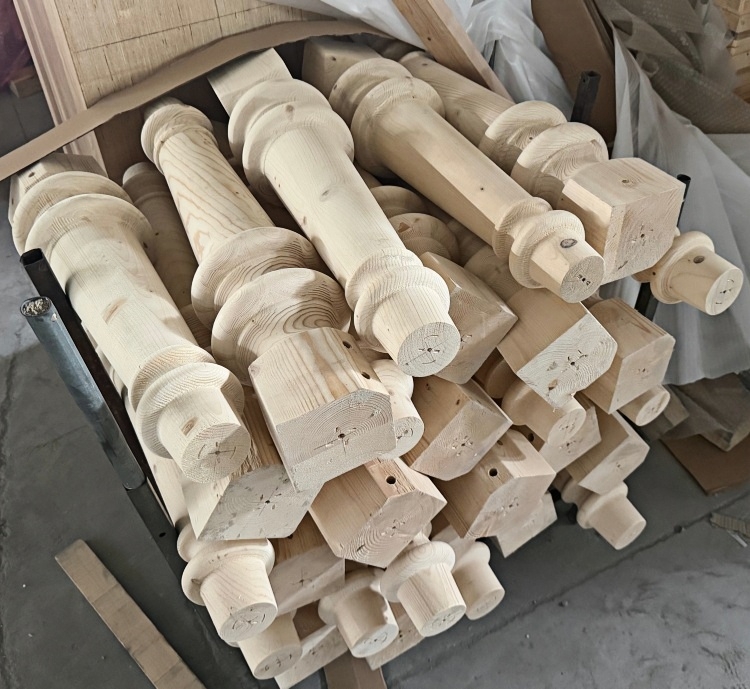
Table legs require multiple stages of sanding. The process begins with coarser abrasives to refine the contours,
followed by increasingly finer sanding until the surface is smooth. Particular care must be taken when working
on rings, grooves, and tapered sections; any uneven sanding can negatively impact the final appearance.
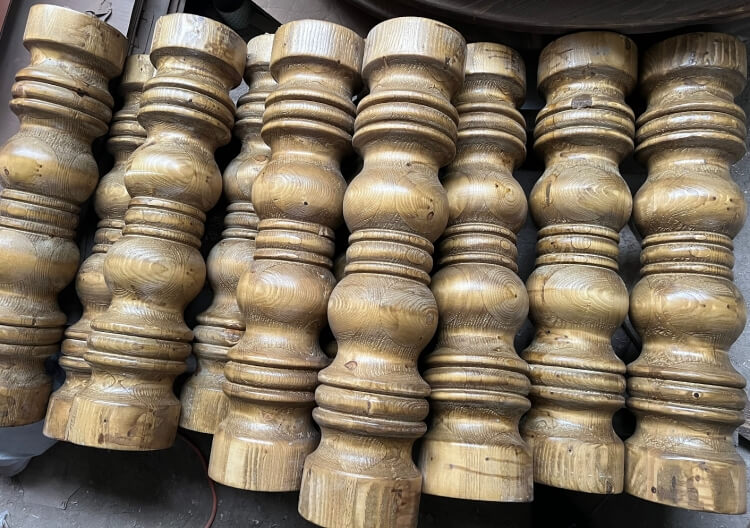
Table Apron and Structural Frame Manufacturing
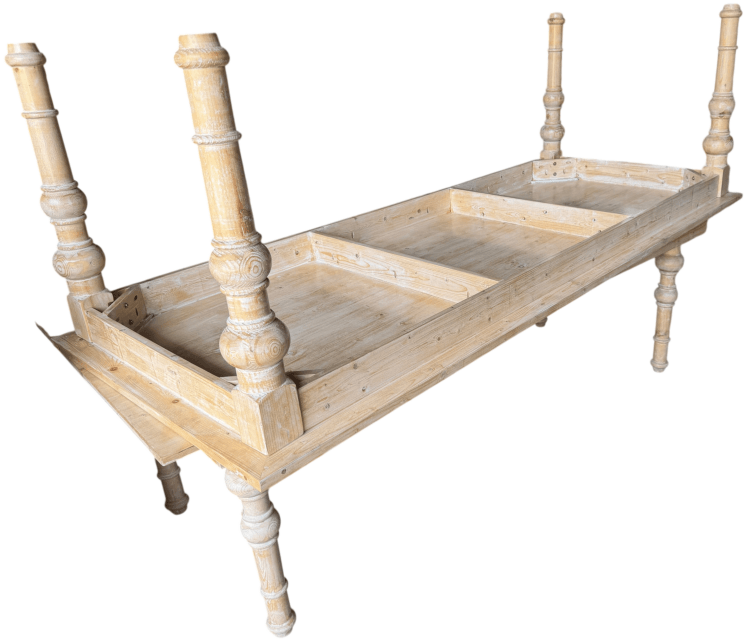
The table apron and supporting frame are constructed from precisely cut wooden components, primarily
serving to connect the tabletop to the legs. This framework helps distribute the load placed on the tabletop
and provides structural support during daily use. Depending on the specific design of the table, the joints
may utilize mortise-and-tenon construction, reinforced corner blocks, or other appropriate mechanical fasteners.
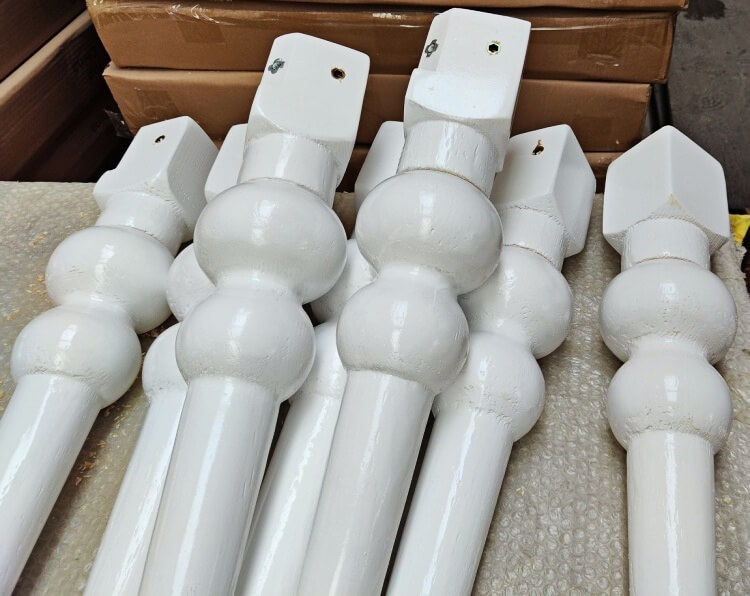
Turned wooden table legs are securely joined to the table’s supporting frame using traditional mortise-and-tenon
joinery; depending on the design requirements, this may be supplemented by metal reinforcements such as
corner brackets or bolts. The mortise-and-tenon joints ensure a tight fit between the wooden components,
while the metal fasteners provide additional reinforcement at critical connection points.
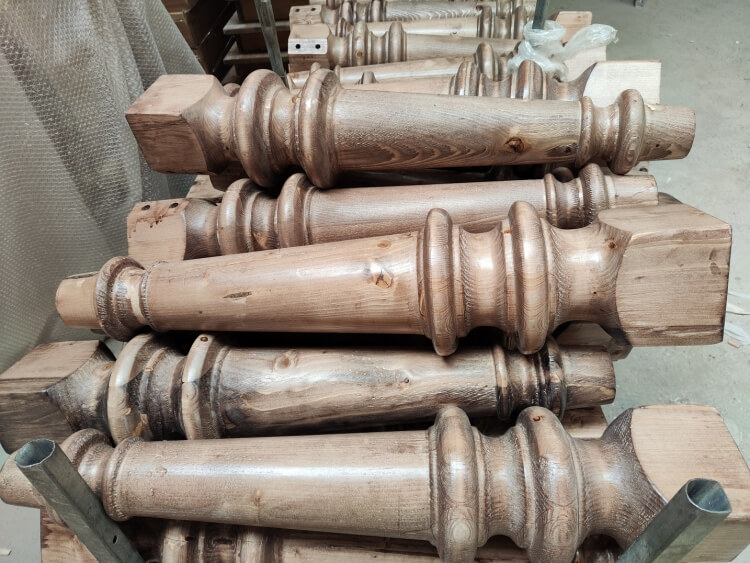
The entire table undergoes at least three stages of sanding, transitioning progressively from coarse to fine-grit
sandpaper to systematically remove rough surfaces, machining marks, and minor imperfections. Special
attention is given to the edges and corners; through meticulous rounding and chamfering, they are refined to
achieve a smoother, more sophisticated profile.
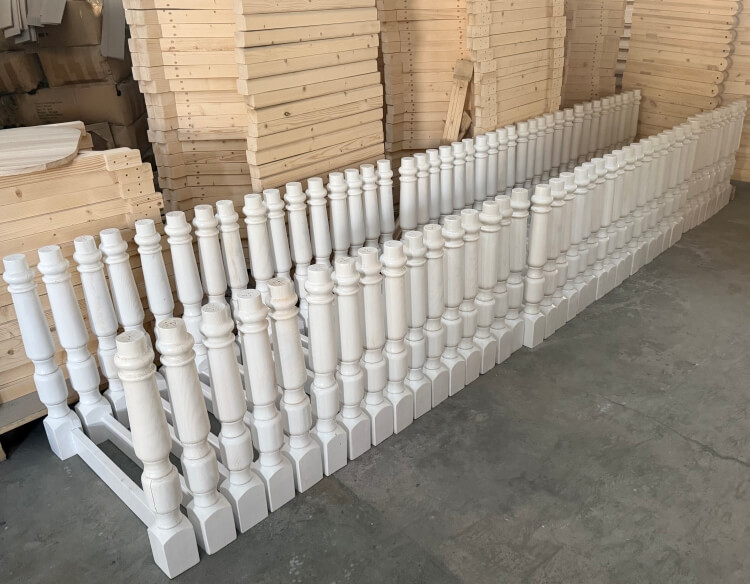
The decorative turned-wood legs, tabletop, and connecting frame have all been thoroughly sanded to ensure
a consistent surface texture across every component. Before the staining and finishing processes, all dust and
loose wood fibers are removed to prevent any imperfections in the final coated surface.
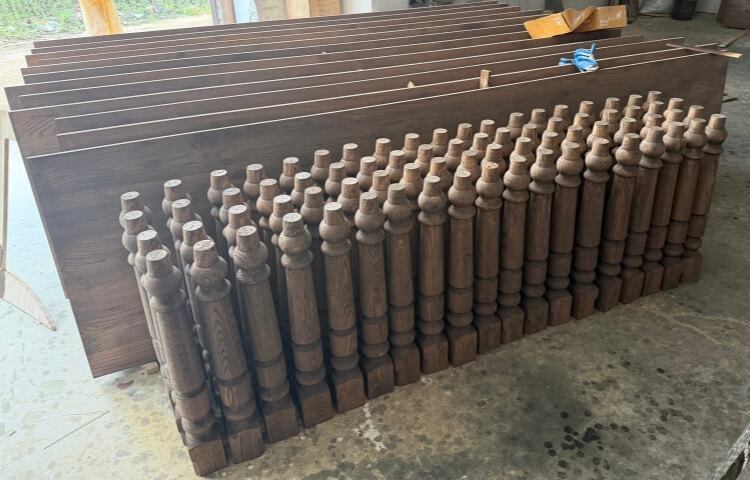
Wood Staining and Protective Coating
The choice of surface finish depends on the desired aesthetic and the client’s specific requirements. Our
dining tables are finished using either eco-friendly water-based paint or hard-wax oil. This “open” finishing
technique preserves the natural grain and texture of the wood, giving the tabletop an authentic, refined
tactile quality.
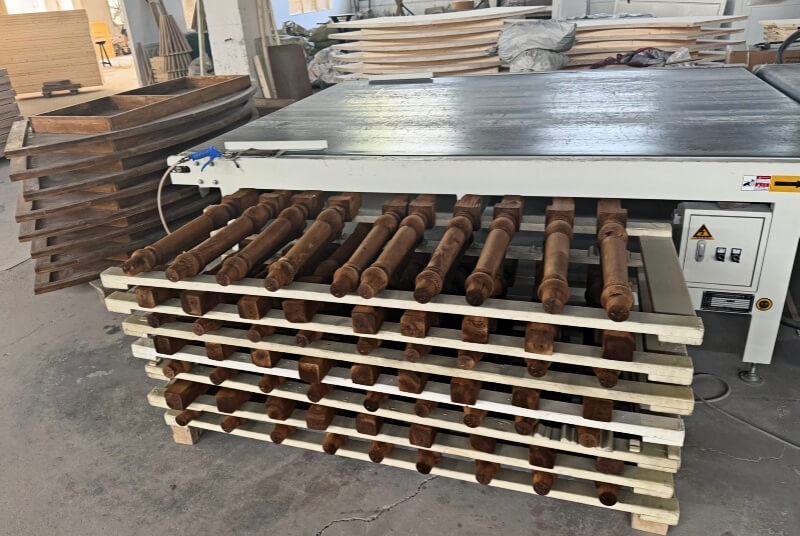
The stain should be applied evenly across all components—including the tabletop, aprons, and turned legs
—with careful attention paid to the specific grain patterns and intricate contours of the wood. Once the stain
has dried, a compatible protective coating (such as furniture varnish, lacquer, or another specified finish)
may be applied to enhance surface durability and facilitate easier routine cleaning.
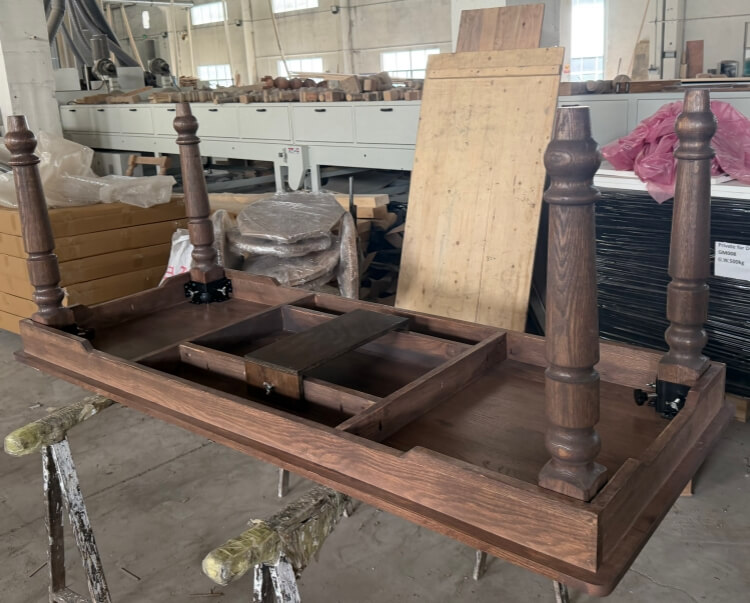
Final Quality Control
Every finished table must undergo a final quality inspection before being packaged. This inspection covers the
following aspects: tabletop dimensions, surface flatness, edge quality, consistency in the appearance of the
bubble leg table legs, the structural integrity of joints, the quality of the surface finish, and overall assembly
precision. The table is placed on a level floor to verify its stability, ensuring that all legs maintain proper
contact with the ground.
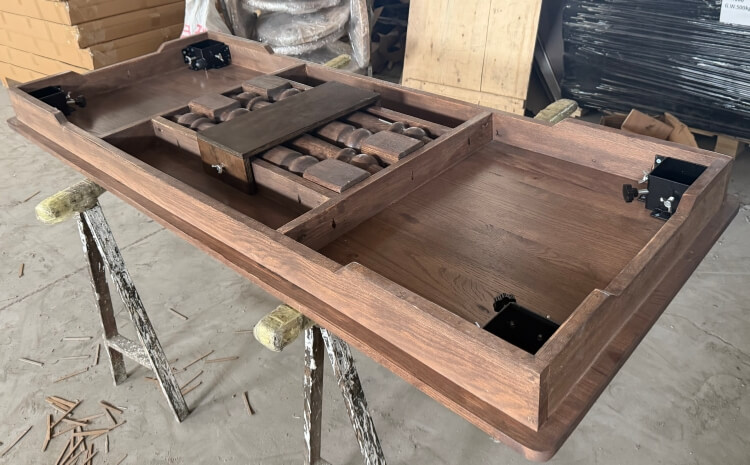
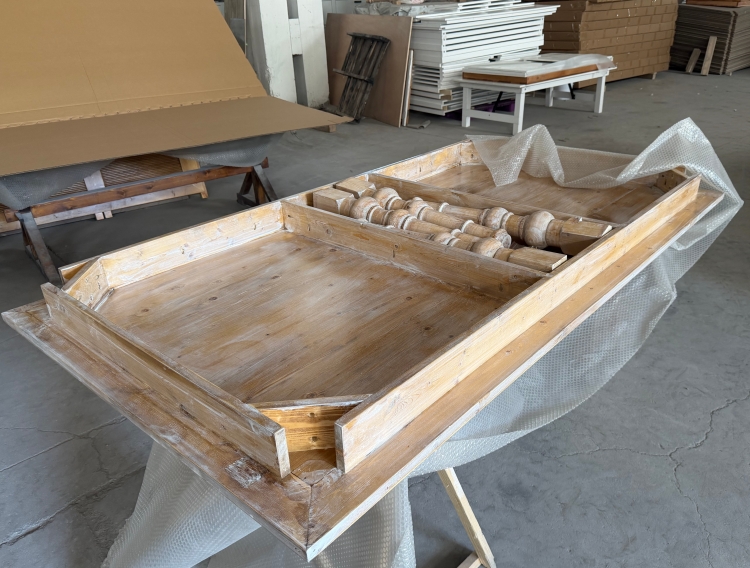
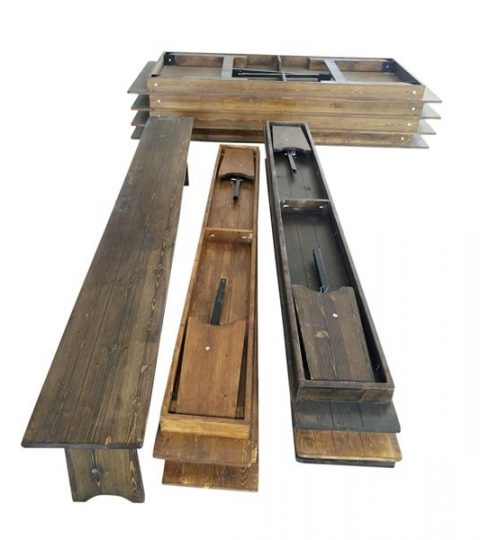
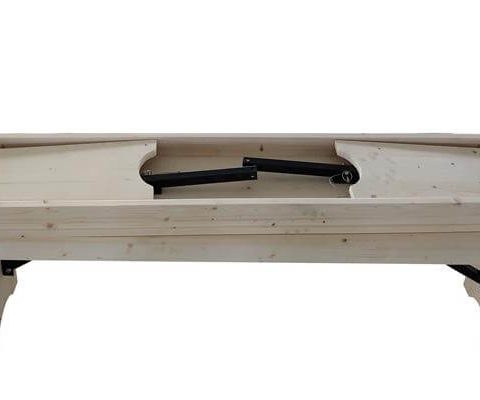
To ensure each bobbin leg dining table arrives in excellent condition, we offer both knock-down (KD) packaging
and fully assembled packaging options according to product design and shipping requirements. All corners and
vulnerable edges are protected with thick foam guards, while the tabletop is wrapped in pearl cotton foam to
prevent scratches, scuffs, and impact damage during handling. Each table is then packed in a high-strength
five-layer corrugated cardboard carton, with wooden pallets or additional reinforced corner protectors used
when necessary to improve stability during transportation. Our protective packaging solutions are suitable for
a wide range of products, including solid wood dining tables, banquet tables, and event furniture, helping
wholesalers, hotels, restaurants, and event rental companies receive their bulk orders in good condition.

Reviews
There are no reviews yet.