
While wedding receptions have remained for the most part the same over the years, some…
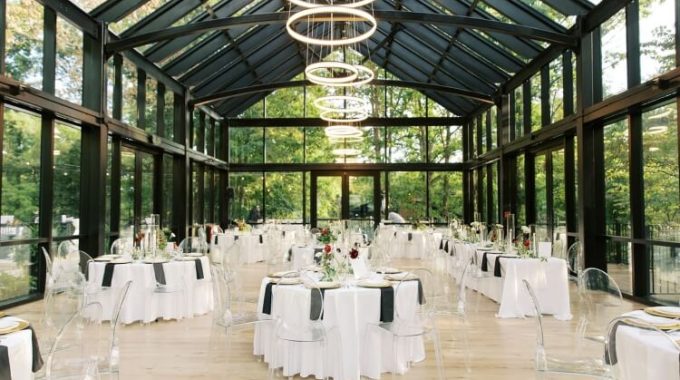
The Definitive Guide to Banquet Table Size: How to Maximize Seating & Space for Any Event
When it comes to launching a great event that captures everyone’s attention, it’s essential to include comfortable seating… And that comfort? It starts with your tables.
Whether the event holds a mesmerizing wedding function, a business event like a seminar, or a cozy anniversary dinner, the positioning of your tables and chairs holds immense value to make it successful—how staff move, how guests greet, and even how the event is viewed. With the right size, everyone has enough space to enjoy their dinner, and limits shouting others for best view. Yet so many people have no idea how to strategize their outlook for the banquet table size, only to realize later that the space is jammed, guests are sitting uncomfortably, and staff faced hurdles to move.
Sit back and relax, this won’t be a hustle anymore!
This article will help you navigate the key points that reflect banquet table dimensions, seating capacities, and layout spacing. Also, the idea of having best event with a few tips throughout. By the time you are a pro in managing and setting up events that align with your needs, without any external help.
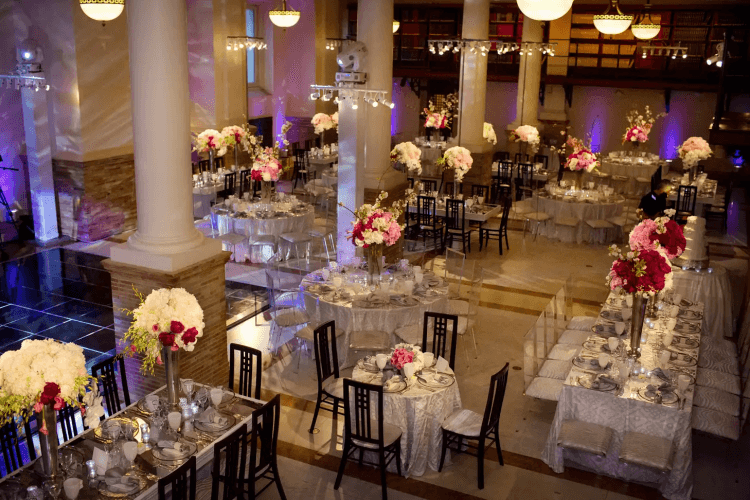
Section A: Understanding the Fundamentals – Common Banquet Table Shapes
People usually do not have a strategic idea of launching an event, and making it successful is another issue that creates hindrance. The right selection of dining tables and aligning them with a suitable floor plan is one of the significant tasks that add value to the events. Before we dive into the details, let’s know the basics. Different tables are used in events for various reasons, yet selecting the right ones is the key to success.
The Classic Round Tables
Common Sizes: 48″, 60″, 72″
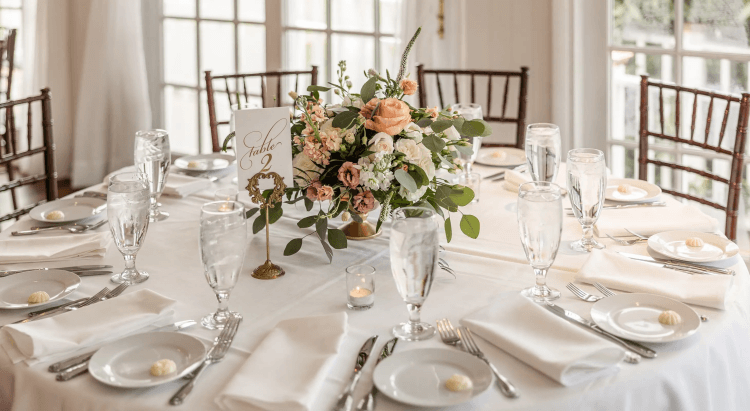
Round tables are the heart of every event, whether a wedding function or a formal corporate dinner. It is a go-to choice for the organizers where guests feel comfortable talking and greeting, whilst enjoying the event. Some pros and cons include;
Advantages:
- Great for greeting and conversations
- Elegant look
Disadvantages:
- Require a large space
- Fewer people adjust per square foot.
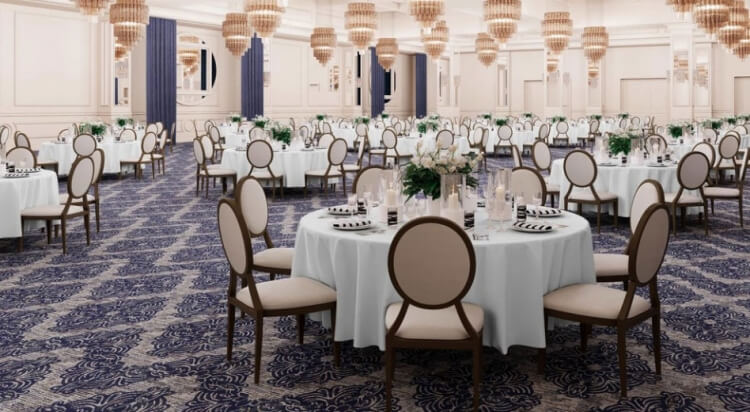
The Versatile Rectangular Table
Most Common Sizes: 6 ft (72″) and 8 ft (96″)
If you are aiming to comfortably accommodate more people in a versatile space for various activities, a rectangular table is usually chosen for such purposes. The idea of launching casual buffet dining, gaming activities, or employees’ seating, this type offers benefits;
Advantages:
- Takes up minimal space
- Manageable in different layouts.
Disadvantages:
- Less intimate for small groups as it limits movements
- Overcrowded-ness .
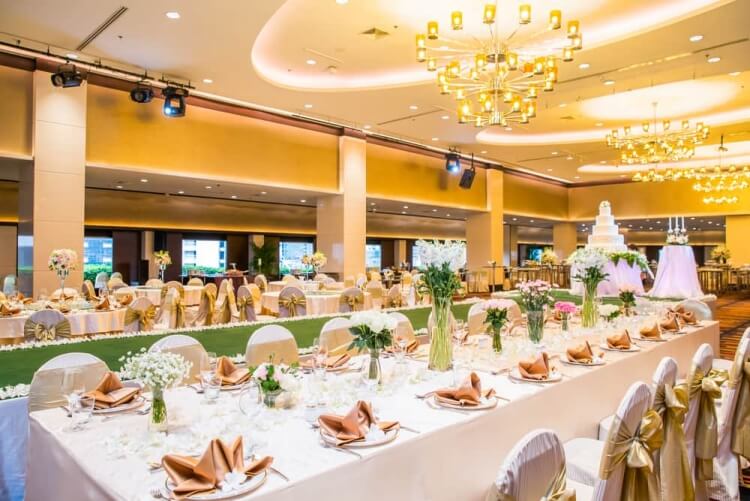
Because Every Event is Unique – Special Tables
To make every event count with its benefits and values, we highlight specialty tables’ guides that suit you.
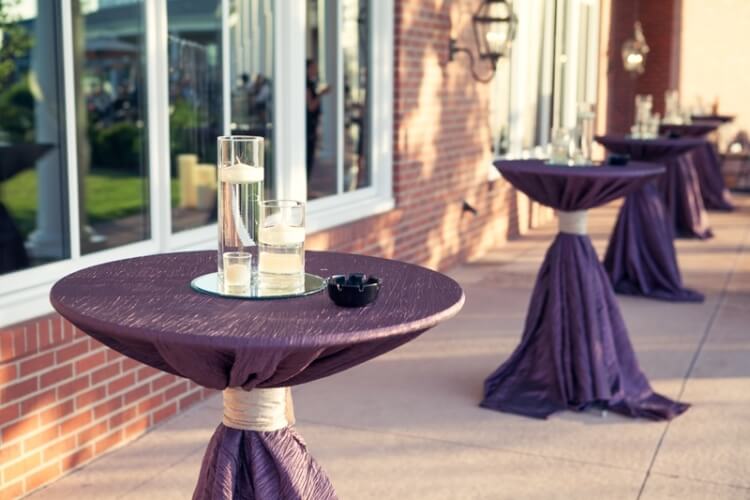
- Cocktail Tables: Ideal for cocktail hours and stand-up receptions for staff to serve and navigate in the room, easily.
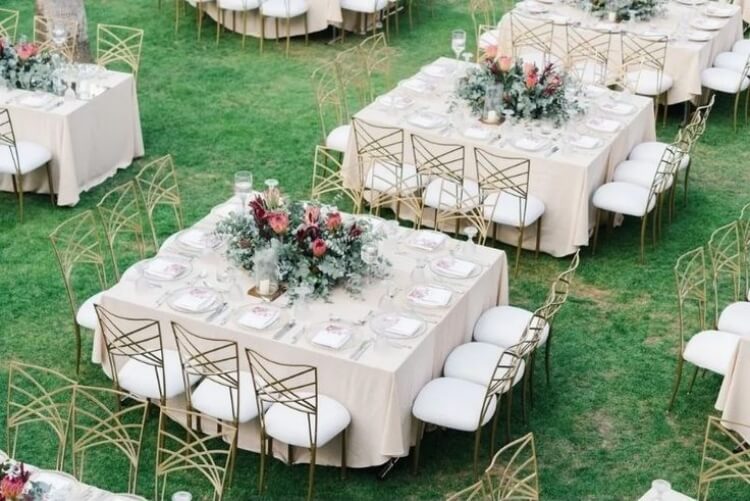
- Square Tables: Gives a modern vibe and works as a central point for social interaction
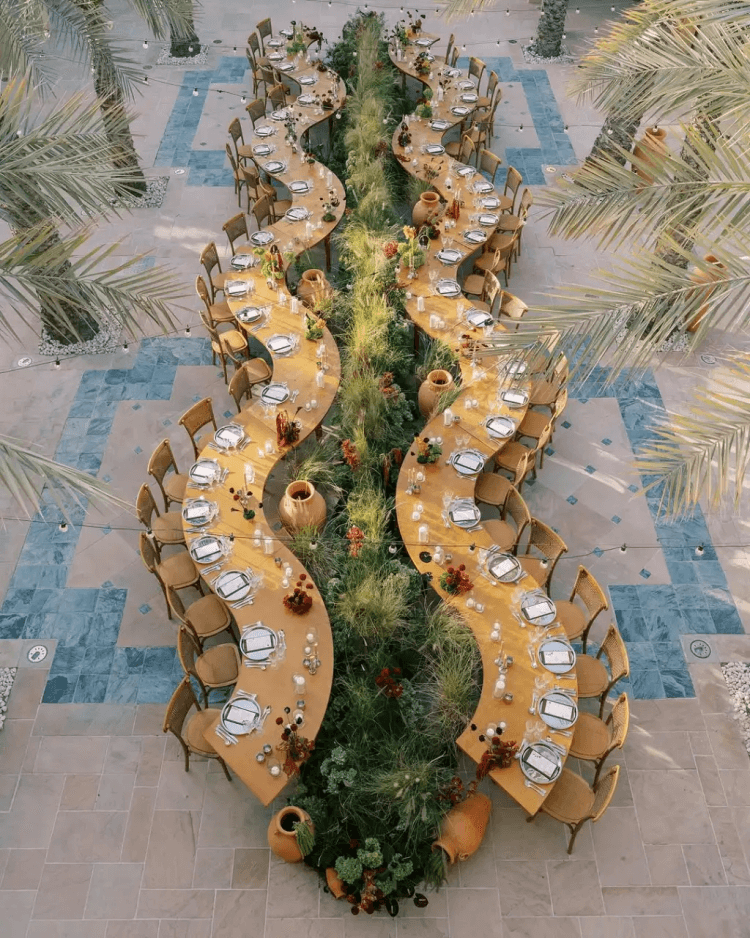
- Serpentine Tables: Used for buffets to give creative layouts and views.
Section B: Guests and Tables? The Seating Capacity Sheet
The question that usually comes to event planners, venue managers, and organizers’ minds is, “How many people fit at a 6ft table?” or how to select the right dining table that comfortably accommodates people without creating mess and chaos in the room. For this, it is essential to know the right space and seating capacity to manage tables around. As it helps in enhancing guests’ comfort, improving the event outlook and contributing to the aesthetics of the entire event. We will help you walk through the seating capacity of round and rectangular tables chart to make a smarter decision in planning any layout.
Round Table Seating Chart
Round table seating ensures greater conversations and symmetry, but the space efficiency remains a challenging task. Thus, we define a comprehensive look at standard round-table dimensions to accommodate guests perfectly.
| Table Size | Comfortable Seating | Max Seating for People | Best For…. |
| 36” | 2-3 | 4 | Small cafes, cozy dinner. |
| 48” | 4-5 | 6 | Intimate dinners, casual dining. |
| 60” | 8 | 9 | Popular choice for fundraising events and wedding functions. Industry standard |
| 72” | 10 | 12 | Large place settings, big banquets, and Galas |
If we break down the details for the above criteria;
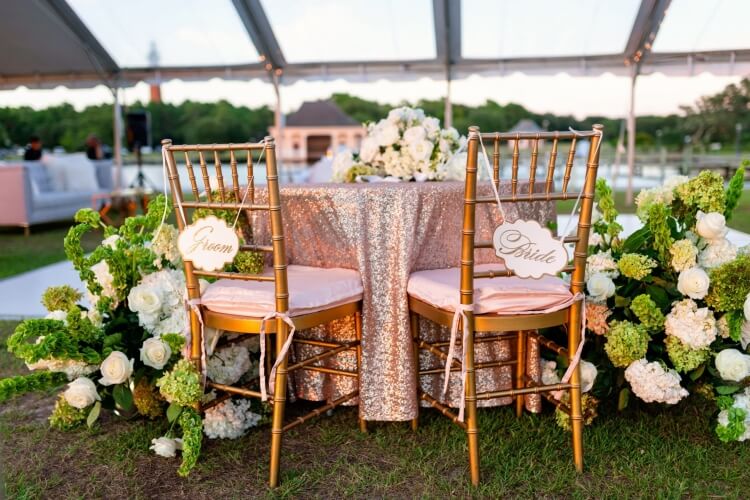
- 36″ Round Table: Best used for an intimate and small group of people to give a perfect, cozy vibe for 2. Not ideal for meal service beyond 2–3 people.
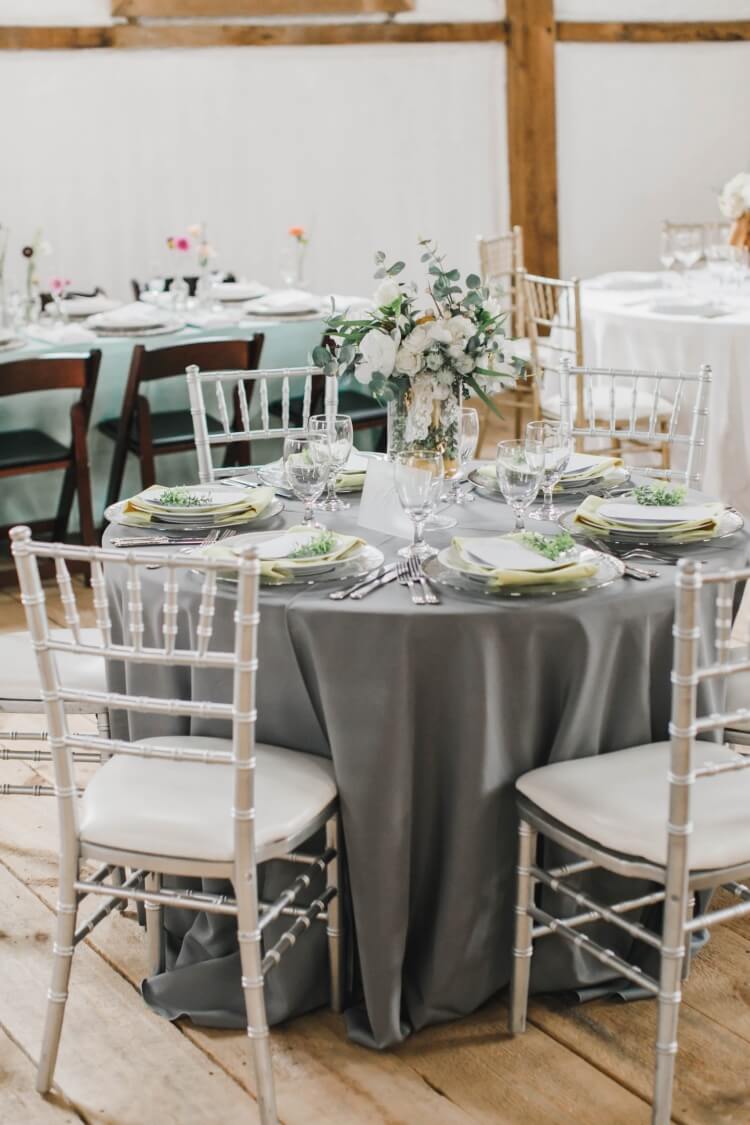
- 48″ Round Table: Easily adjustable in tight spaces, and commonly found in small dining rooms to help accommodate 4-5 people.
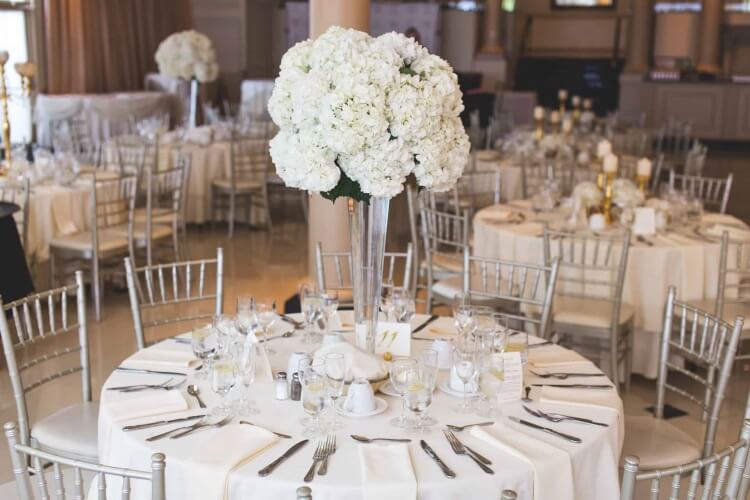
- 60″ Round Table (5 ft): This is the optimal go-to option for banquet halls. The industry standard table allows for 8 people to sit, and a maximum of 9, if they sit closely.
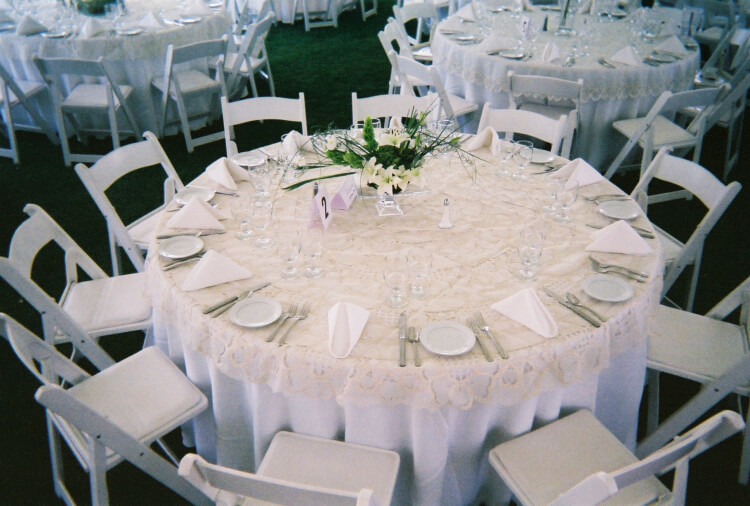
- 72″ Round Table (6 ft): Consider ideal for very large-group gatherings. However, people may struggle to converse and get food comfortably.
Rectangular Table – Chart
The versatility of rectangular tables has been discussed, and it is highly recommended due to their greater space efficiency. You can choose it for training sessions, buffets, and family-style meals. But it requires a strategic mindset for smarter decisions in selection and guests’ adjustment to gain ultimate benefits.
| Table Size | Comfortable Seating | Max Seating for People | Best For…. |
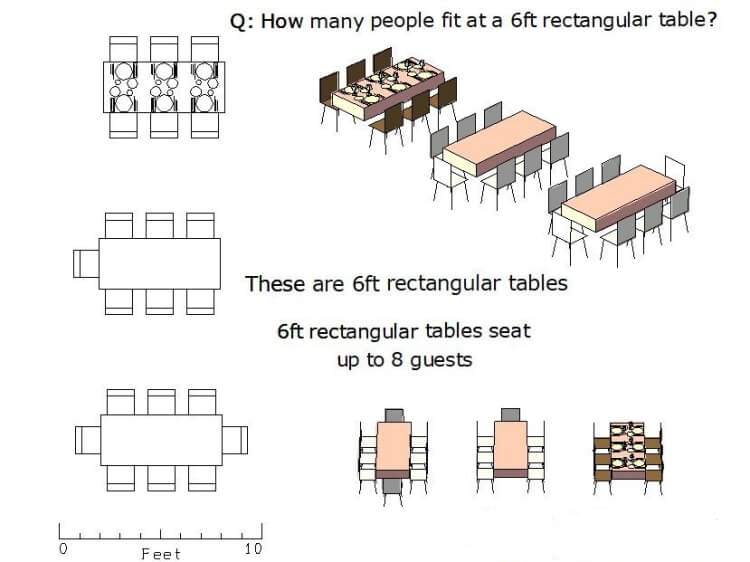
| 6 ft (72″) | 6 (3 per side) | 8 | General seating, usually for a buffet. |
| 8 ft (96″) | 8 (4 per side) | 10 | Great family-style dinners. |
- 6ft rectangular table: Typically allows to accommodate 6 people for general seating, with 1 person on each end for 8 8-person capacity.
- 8ft rectangular table: Comfortably adjust 8 persons, with 1 on each end, for maximum seating for 10 persons.
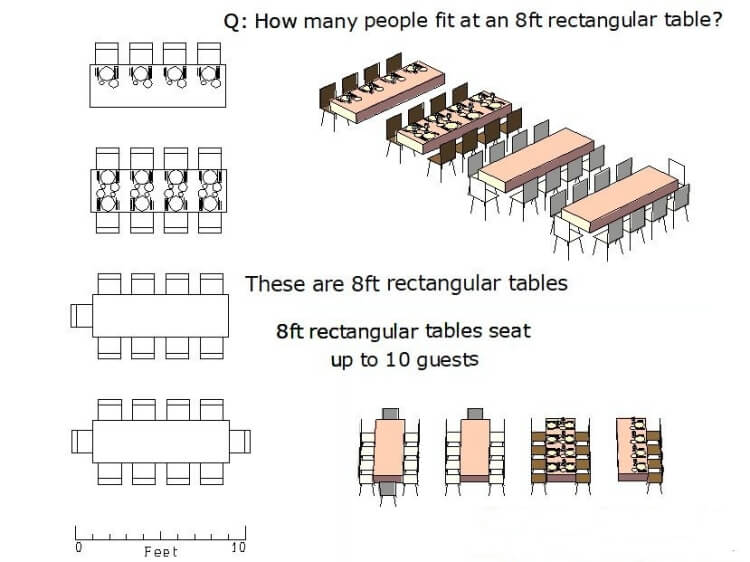
Note: Keeping the add ends helps you to maximize the seating capacity without a hustle and mismanagement.
Comfort vs. Capacity: Comparison
Throughout the guide, the terms “comfortable seating” and “maximum capacity” are used often to define the outlook and a better floor plan. Usually, venue managers and planners often create seating that aims to squeeze guests, leaving limited room for conversations. But comfort plays a vital role in shaping your floor plan, strategically, and allowing guests to be seated in place for hours. Here’s what we further highlight;
- Comfortable = 24” per person gives guests room for eating, talking, and enjoying for hours.
- Tight =18-20” per person. It feels cumbersome for guests as the tight seating is not recommended for longer duration gatherings. However, it is good for standing events.
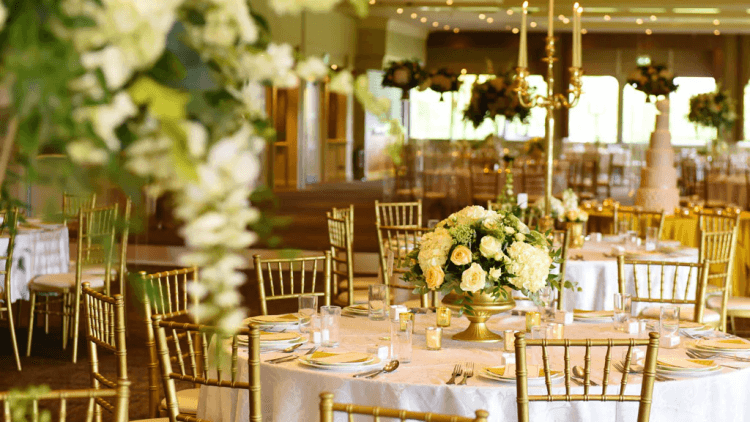
If an event is aesthetically pleasing and includes a full dinner with wine glasses, bread plates, and centerpieces, comfort is the ultimate choice. While tight seating will work fine for the cocktail event, where guests are not in place for hours.
Section C: Create an Optimal Floor Plan
The movement of people is directly linked to how you aim to fit them, comfortably. Evidently, the right tables helps in making successful floor plans, but negligence is often made in determining how much space is needed between tables, to avoid overcrowding, and deliver a free-flowing environment.
Let’s walk through the spacing rules to help create a professional floor plan to serve the best outlook for you.
Spacing between Tables
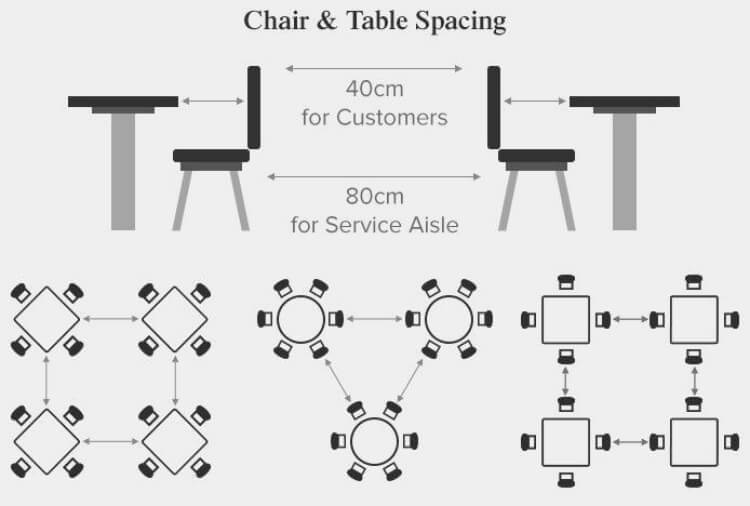
We often see a major mistake being made by event planners is to place tables so close that a waiter cannot even pass. While it gives ample room for seating, it also aids in compromising guests’ access and comfort to the facilities.
The rule reflects;
| Spacing Required | Apply for |
| 42–48 inches (chair to chair) | For guests to access only |
| 60 inches and beyond | Allow staff to serve meals or pass through the trays |
 Other Space
This requires a strategic mindset to manage guests’ congregation, entrance, and exit, without any chaos.
- Main aisle: Give space 6–8 feet of width so guests and servers don’t struggle.
- Secondary aisle: Can be 4 feet wide, only account for occasional passage.
- Parameter: Requires a space of 36–48 inches between walls and tables to ensure compliance with fire codes and easy vendor access.
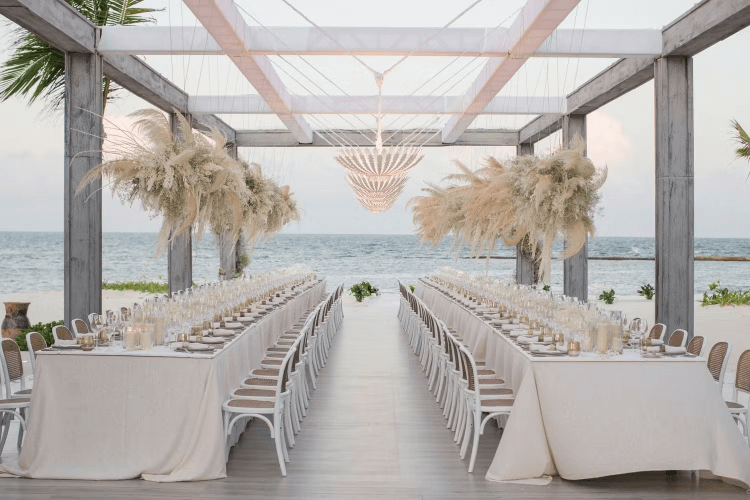
Think of Dance Floors, Buffets, and DJs?
Yup, we need to include them in this planning for a better outcome.
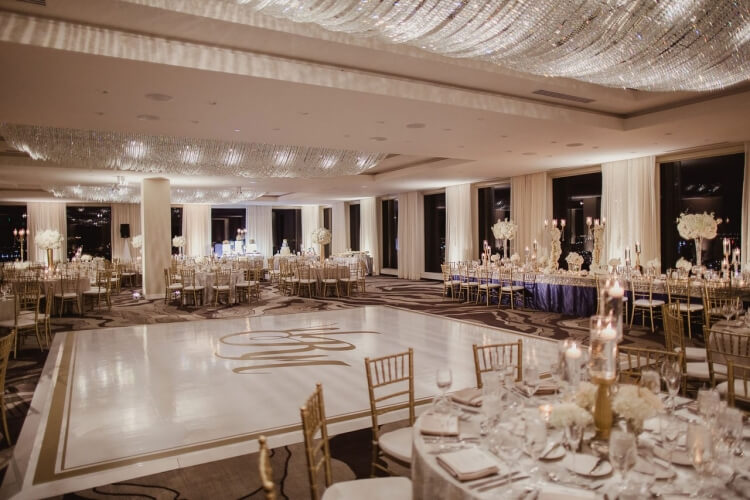
- Dance area: 3 sq ft per dancer. i.e. 400–500 sq ft for 100 people
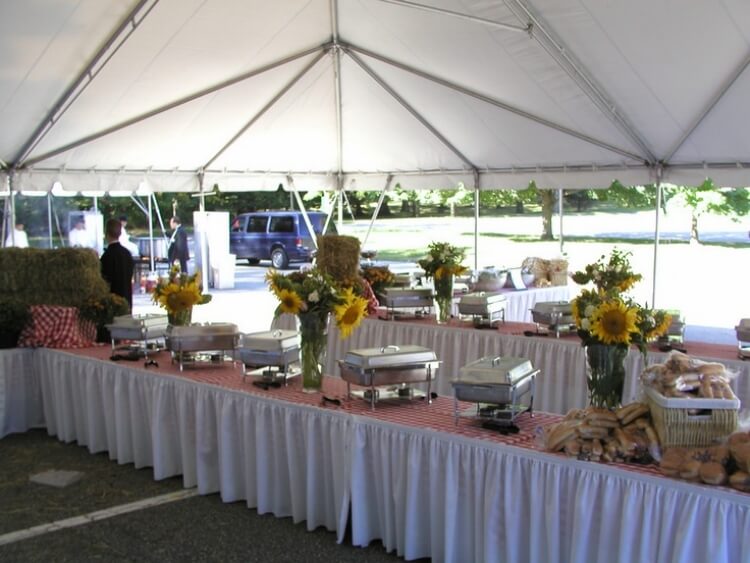
- Buffet line: 8–10 feet of length to accommodate 50 guests
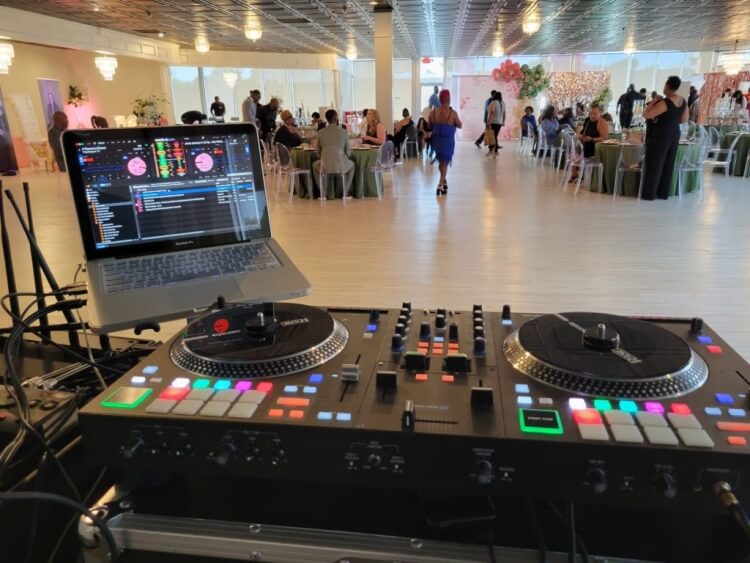
- Music area/DJ Booth: 100 sq ft
Arranging space for more social areas like photo booths and lounges is also worth noting.
Real-Life Example: Calculations
For example;
Venue area: 2,000 sq ft, Guests: 100
- Deploy 60” round tables that seat 8 guests each comfortably.
- Require 13 tables (100 ÷ 8 = 12.5, overall).
- Rounding up chairs, tables and capacity ~100 sq ft → 13 tables x 100 = 1,300 sq ft
- Additions, others, i.e., Dance floor: 300 sq ft, DJ booth: 100 sq ft, Buffet: 150 sq ft
- = 550 extra sq ft
Required complete space: 1,850 sq ft
Ideal plan, with a sufficient 150 sq ft additional space.
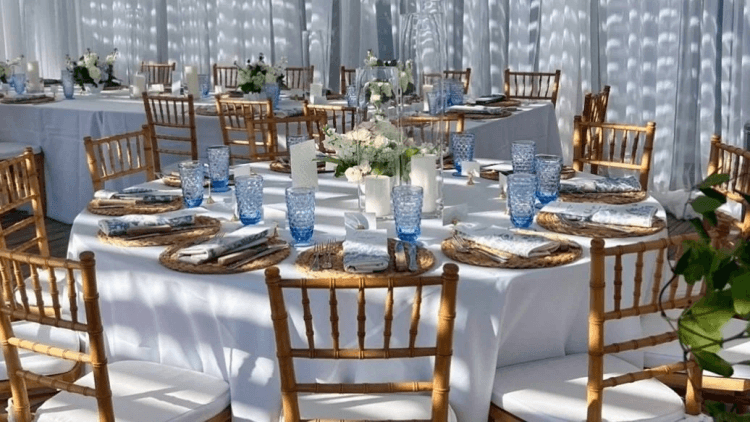
Section D: Choosing the Right Table for the Right Event
For all these reasons, we navigated the selection of tables, the comfort, and the capacity to ensure better seating arrangements in the right direction. But, do you know how important it is to have smarter choices in selecting tables to amplify the event outlook as per the type? Or “What event, how many guests, and which table?” remains a hurdle that demands intelligence? We can help you figure out the solution to accommodate the right type of tables to align with the event themes, without creating a mess. Come, let’s take a look.
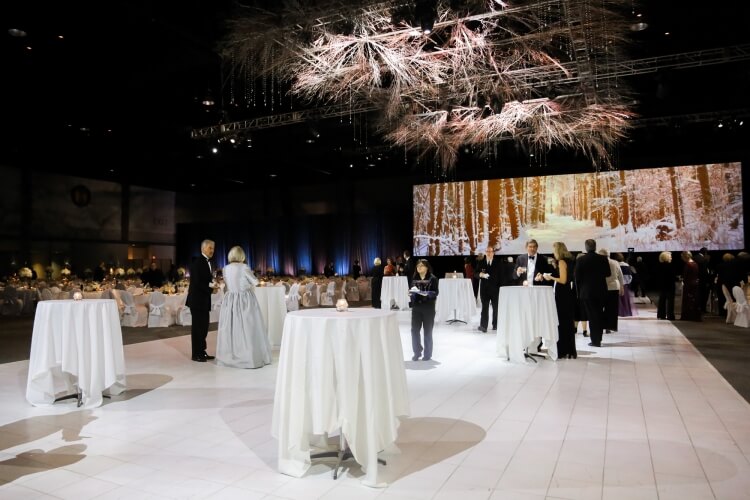
Exhibitions & Galas
- Accommodate 10-12 guests in 72″ round tables for a better outlook.
- Vibes with more cocktail tables in the side areas.
- Makes mingling better and highlights Auction items with a separate floor.
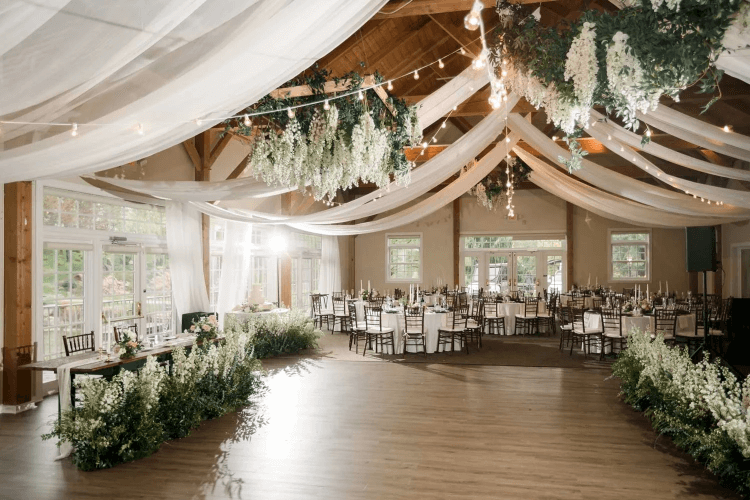
Wedding Functions
- Mix of rectangular head table and 60” round tables. You can include a small table to make couples comfortable.
- Keep space for dance floors, music area, booths, etc.
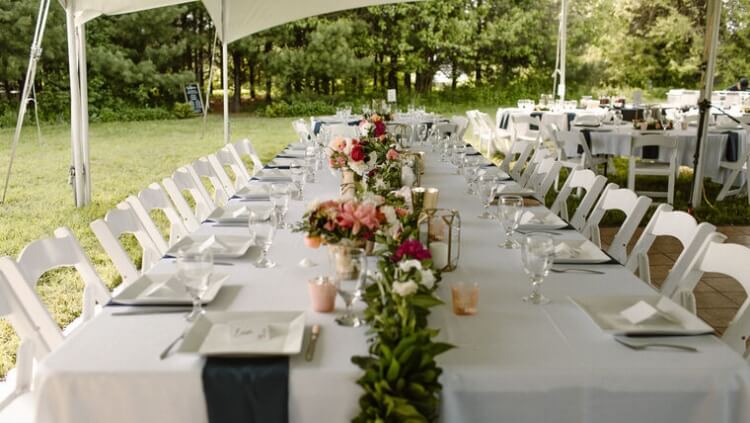
Corporate-Style Events
- Optimize 6ft or 8ft rectangular tables, arranging in a curve-style
- Ensure greater access, visibility, and movement.
- For robust networking, add cocktail stands.
Giving a Final Thought
The selection of the right banquet table size is one of the biggest behind-the-scenes decisions that makes your event yay or nay for the people. Mostly event planners, venue managers, and organizers lack sufficient knowledge and ideas to warmly welcome guests with strategic floor plans. How, when, and where, ultimately give clarity to balance the outlook for smarter decisions. One mismanagement in aligning guests with the tables placed leads to a negative impact in the long run. Done right, your layout reflects vibes, provides comfort, and flow, creating an event people will not forget for the years ahead.
So don’t wait and mark this guide, recall all the bad planning, and navigate ways to make events successful in all the right ways.
Ultimate Banquet Layout Plan: Download Free PDFs;
Enhance your ideas from links below;
Download our FREE Banquet Table Size & Seating Chart.
Or quickly get a look at our commercial-grade banquet tables right here. We will help you make the most out of it.
Related Posts

This Post Has 0 Comments